
SLA + Support Dashboard
Organized priority-based ticket queues, service-timing indicators, and support reporting to surface urgent work and guide escalation review.
Problem & approach
Situation
A support queue can hide urgent or overdue tickets when priority, ownership, and service-timing information are difficult to review together.
Goal
Make important work easier to identify and provide a shared view of response timing, resolution timing, and support workload.
Solution
Combined ticket properties, priority-based views, SLA and escalation indicators, and centralized dashboard reporting.
How support work is surfaced
Shared ticket data connects day-to-day triage to escalation and performance review.
- Ticket intakeStatus, priority + owner
- Priority queueSurface urgent and aging work
- SLA monitoringReview response + resolution timing
- Escalation reviewIdentify overdue work for follow-up
- DashboardReview workload + issue trends
See the support setup
Open each screenshot to inspect the queue, escalation configuration, and reporting view.
 QueuePriority-based ticket queue ↗
Ticket priority, ownership, status, and age organized for triage.
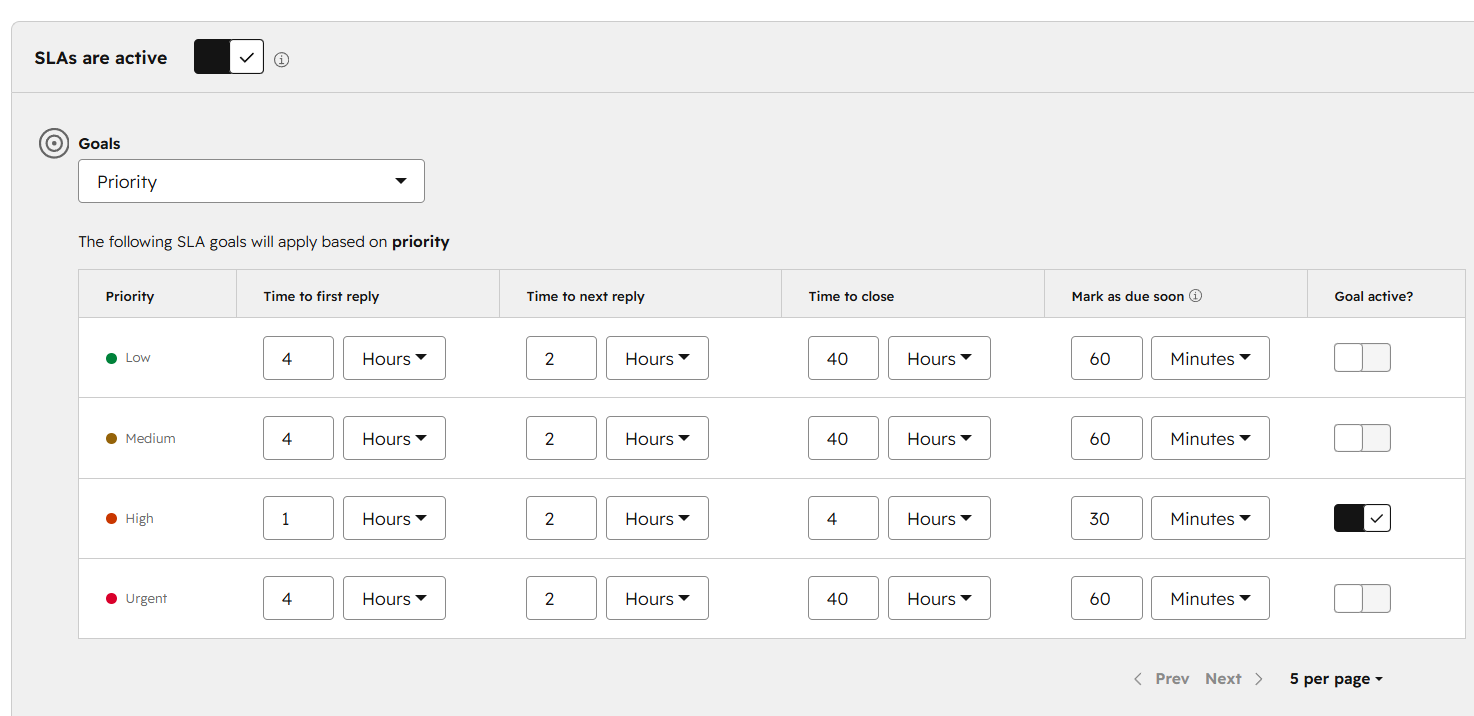
 ControlSLA & escalation configuration ↗
Service-timing and escalation information used to identify follow-up needs.
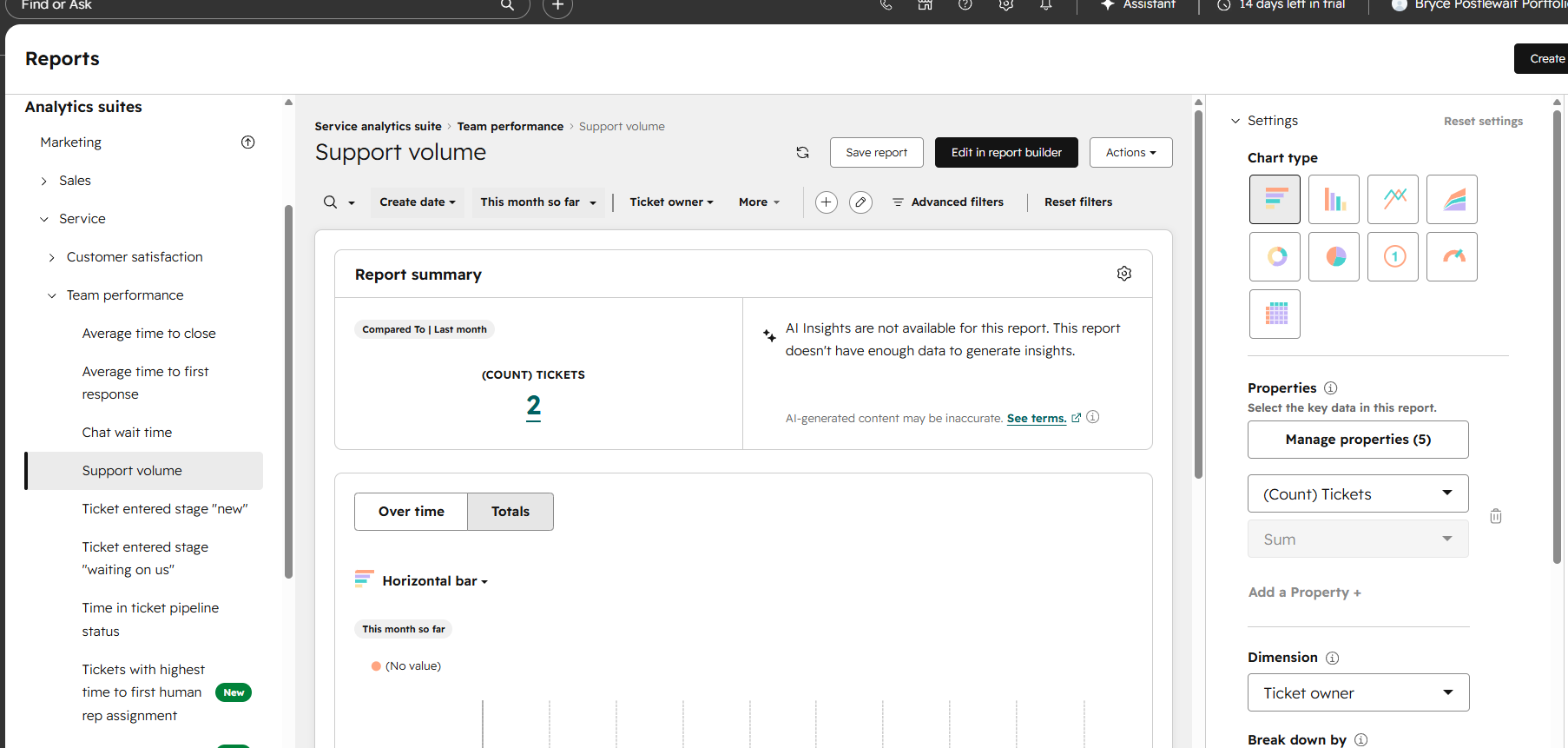
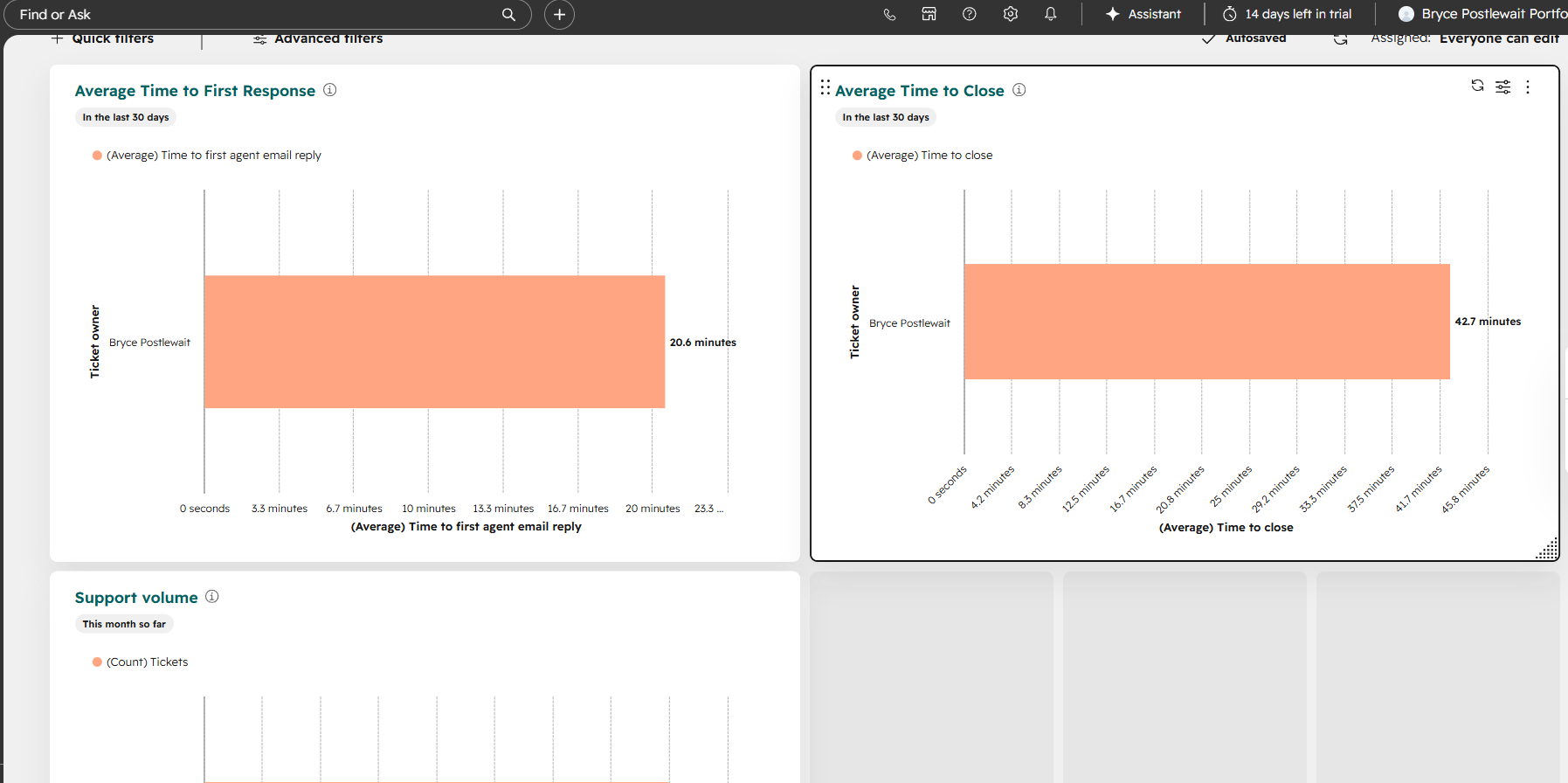 ReportingSupport performance dashboard ↗
A centralized reporting view for support performance and workload.
Key design decisions
Prioritization layer
Combine priority with status, age, and ownership so high-priority tickets and overdue work remain visible to the support team.
Service-control layer
Use response and resolution timing alongside overdue and escalation indicators. Queue views surface tickets for agent or management review.
Reporting layer
Keep definitions consistent across queue and dashboard views so workload, overdue tickets, and recurring issue categories can be reviewed together.
What the setup delivers
- Priority-based views for identifying urgent and aging support work.
- Consistent ticket properties for reviewing service timing.
- Escalation visibility for follow-up and management attention.
- A centralized dashboard for workload and support-performance review.
- A shared framework for monitoring recurring issue trends.